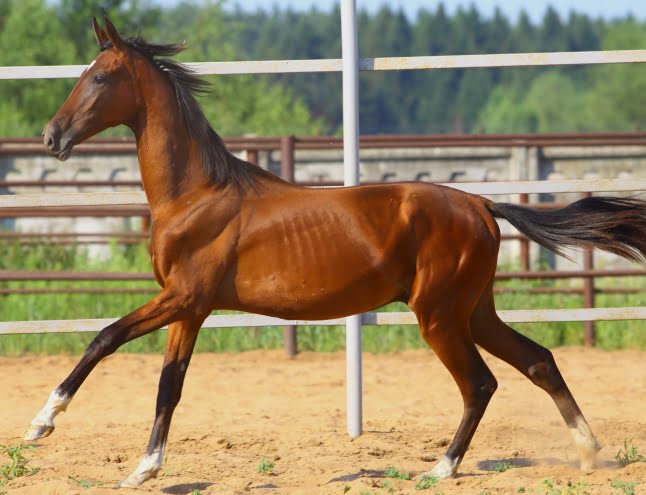

Breed Name: Don Horse
Origin: Russia
Height: 1.5 – 1.6 meters
Weight: 400 – 550 kg
Coat Colour: Chestnut, bay, black
Temperament: Intelligent, calm, willing to work
Uses: Dressage, jumping, eventing, carriage driving
Life Expectancy: 25 – 30 years
Distinctive Features: Strong, muscular build, short neck, sloping shoulders
Other Names: Russian Don, Don, Donetskiy
Are you looking to learn more about the Cleveland Bay Horse, also known as Don Horse? This article will provide you with a comprehensive overview of this unique breed of horse. From its history to its temperament and physical characteristics, you will discover a lot about the Don Horse from reading this article. Whether you are looking to learn more about the breed for general knowledge or for a potential purchase, this article will provide you with all the information you need. Read on to learn more about the Don Horse.
The History of Don Horses
The Don Horse is a breed of horse that originated in the Don River region of Russia. The breed has a long and storied history, and has been used for a variety of purposes throughout its existence. The Don Horse was originally bred as a war horse in the mid-1700s, and was used extensively by the Russian Cossack cavalry. The breed is known for its strength, stamina, and agility, and was used for a variety of tasks, such as carrying heavy loads, transporting troops, and even as a cavalry mount.
In the late 19th century, the Don Horse was exported to Australia, where it was used for a variety of purposes, including stock work and racing. The breed proved to be an excellent racehorse, and its popularity spread throughout the country. The Don Horse is still used for a variety of purposes today, including show jumping, dressage, and eventing. The breed is also popular as a companion animal, and is known for its intelligence and loyalty. The Don Horse is an integral part of Australian culture, and its history is one that will be remembered for generations to come.
Characteristics and Traits of Don Horses
Don Horses are a breed of horse native to the Don River region of Russia. They are known for their strength, intelligence, and hardiness. They are also known for their quickness and agility, and they have a strong sense of loyalty and devotion to their owners.
Don Horses are usually medium-sized, with a strong, muscular body and a thick mane and tail. They have a long, straight neck and a broad chest. Their coat is usually a dark bay or black, and they have a short, thick mane and tail. They have a gentle temperament and are easy to train. They are also known for their strong work ethic and willingness to please their owners. Don Horses are also known for their ability to adapt to different environments and climates. They are strong and hardy, and can work in all types of terrain. They are also good jumpers and can be used for show jumping and dressage.
Breeding and Training Don Horses
Don Horses are a breed of horse native to the Iberian Peninsula in Europe. They are known for their intelligence, strength, and agility. They are often used for dressage, show jumping, and other equestrian sports.
Breeding and training Don Horses requires specialised knowledge and skill. The horses must be bred for specific traits, such as strength and agility, and trained to perform specific tasks. Don Horses are highly intelligent and can be trained to respond to voice commands and hand signals. They are also very sensitive and require gentle handling. Training should start from a young age, and should be done in a consistent and patient manner. It is important to reward the horse for good behaviour and to use positive reinforcement. Proper nutrition and exercise are also essential for the horse’s health and wellbeing.
Don Horses are a versatile breed and can be used for a variety of purposes. They are often used in dressage, show jumping, and other equestrian sports. They are also used for recreational riding, such as trail riding and endurance riding. Don Horses are an excellent choice for riders of all levels, from beginners to advanced. With proper care and training, Don Horses can be a loyal and rewarding companion.
Popular Uses of Don Horses
Don Horses, also known as the Don, are a breed of horse native to the Don River region of Russia. They are a strong and hardy breed, well-suited to a variety of tasks. Don Horses are popular for a range of uses, from sport to leisure activities.
In the sporting world, Don Horses are used for dressage, show jumping, and eventing. They are renowned for their athleticism and agility, and are a popular choice for competitive riders. Don Horses are also used for pleasure riding, such as trail rides and hacking. Their docile temperament and willingness to work make them a great choice for both experienced and novice riders. Don Horses are also used for light farm work, such as ploughing and carting, due to their strength and endurance.
Don Horses have also become popular for show and exhibition purposes. They are often seen in parades and shows, as well as in films and television. Their striking appearance and easy-going nature make them a popular choice for many equestrian activities. Don Horses are also popular for use in therapy and rehabilitation programs, due to their calm and gentle nature.
Famous Don Horses in History
The Don Horse is a breed of horse that is known for its strength and endurance. It is a breed that has been used throughout history for many purposes. The Don Horse is thought to have originated in the steppes of Russia and was used by the Cossacks for war and transportation. The Don Horse is a hardy breed and is known for its ability to work in extreme conditions.
The Don Horse has been used throughout history for many purposes. It was used by the Cossacks in the 18th century for war and transportation. In the 19th century, the Don Horse was used to pull heavy wagons and carts. The Don Horse was also used in the American Civil War and World War I. During World War II, the Don Horse was used for heavy transport and was even used to pull artillery. The Don Horse is also used today for recreational riding and show jumping. Its strength and endurance make it an ideal horse for any purpose.
Don Horses in Art and Culture
Don horses have long been an important part of art and culture around the world. From the ancient Egyptians to the Native American tribes, horses have been depicted in artwork, literature, and mythology. They have been used to represent power, strength, and beauty, and have been an integral part of many cultures for centuries.
In Australia, the don horse has been particularly prominent in art and culture. From the early days of the Australian colonies, the don horse was used to transport people and goods across the continent. It was also a symbol of wealth and prestige, and was often depicted in paintings and sculptures. Today, the don horse is still a popular subject in art and culture, with many contemporary artists incorporating it into their works. It is also a popular subject for photography and film, with many Australian films featuring the don horse. Its symbolic power and beauty make it an enduring symbol of Australia’s history and culture.
Caring for Don Horses: Health and Nutrition
Caring for Don Horses: Health and Nutrition is an important aspect of ensuring the longevity and wellbeing of these majestic animals. Don Horses are a strong, hardy breed of horse originating from the Don region of Russia, and are well-suited to work in a variety of environments. To keep these horses healthy and in peak physical condition, it is important to provide them with adequate nutrition and exercise.
A balanced diet is essential for Don Horses, and it is important to provide them with a variety of fresh hay, grass, and grains. They should also have access to clean, fresh water at all times. Regular exercise is also important for Don Horses, and they should be given the opportunity to run, jump, and move freely on a regular basis. It is also important to provide them with regular veterinary care to ensure any health issues are addressed promptly. Regular hoof trimming and grooming are also important for the health and wellbeing of Don Horses.
Final Thoughts
the Don Horse is a unique and versatile breed of horse with a long and storied history. From its origins in the Don River region of Russia to its use in a variety of activities today, the Don Horse is an integral part of Australian culture. With its strength, intelligence, and hardiness, the Don Horse is an excellent choice for riders of all levels. With proper care and training, Don Horses can be a loyal and rewarding companion. Whether you are looking to use this breed for sport, leisure, or show purposes, the Don Horse is sure to be a great addition to your family.
Don Horse FAQs
While the Don Horse was once a critically endangered breed, conservation efforts have helped to increase their population in recent years.
Yes, anyone can own a Don Horse as long as they have the means to properly care for the animal. However, the breed is relatively rare and may be difficult to find in some areas.
Don Horses require regular exercise, proper nutrition, and access to fresh water and shelter. They also need regular grooming to maintain their coat and overall health.
Don Horses are known for their strength, agility, and endurance. They are also typically tall and muscular, with a distinctive coat color that is usually bay or chestnut.
Don Horses typically live between 20 and 25 years, although some individuals may live longer with proper care.
The Don Horse is a breed of horse that originated in Russia, specifically in the Don River region.
The Don Horse has a rich history that dates back to ancient times. They were used by the Cossacks, a group of people known for their military skills, and played a significant role in the development of Russia’s economy and culture.
Today, Don Horses are still used for a variety of purposes, including riding, racing, and agricultural work. They are also considered an important part of Russia’s cultural heritage.
Don Horses are known for their calm and gentle temperament, making them suitable for a variety of tasks and activities.
There are many resources available online and in print that provide in-depth information about the history, characteristics, and care of the Don Horse. Some good places to start include breed associations and equine magazines.